Ocean-Bound Plastic
OCEAN MATERIAL | FEB 21ST 2026 | 15 MIN
Ocean-Bound Plastic – More Than a Buzzword
Table of Contents
- What Most People Get Wrong About Ocean Plastic
- What Is Ocean-Bound Plastic – Really?
- Why Ocean-Bound Plastic Needs Real Solutions
- How Ocean Material Gets Done – Step by Step
- The People Behind the Ocean-Bound Plastic
- From Waste to Value
- Our Holistic Approach to Ending Ocean Plastic
- Choosing an Ocean-Bound Plastic Supplier
What Most People Get Wrong About Ocean Plastic
Most plastic in our oceans doesn’t come from illegal dumping at sea. It starts on land – in broken waste systems, rivers, and coastlines without infrastructure. Once plastic is exposed to sun, saltwater, and time, it degrades into brittle fragments and becomes nearly impossible to recycle.
That’s why prevention matters more than cleanup. And why Ocean Material operates directly in high-risk coastal regions to stop plastic before it enters the ocean.
Image: The Real Faces of Ocean Plastic
Caption: A glimpse into the diverse realities of plastic waste in Southeast Asia – from waste pickers and ghost nets to certified recycling hubs. Each face and scene represents a step in Ocean Material’s traceable supply chain.
What Is Ocean-Bound Plastic – Really?
The term “ocean-bound plastic” (OBP) was defined by Dr. Jenna Jambeck in 2015 as mismanaged plastic waste within 50 km of the coastline. Since then, the term has evolved to include:
- Potential OBP – poorly managed waste near coasts
- Waterway OBP – material in rivers and canals
- Shoreline OBP – debris close to beaches
- Fishing gear OBP – discarded nets, lines, and traps
At Ocean Material, a main part of our work is recovering fishing nets from small coastal communities. These nets were historically disposed of directly at sea and are now returned through structured collection systems. While technically part of the ‘ocean-bound plastic’ category, we treat and communicate this material as ‘ocean plastic’ – due to its direct marine exposure, high ecological impact, complex processing requirements, and because it represents the most harmful form of marine plastic pollution.
Why Ocean-Bound Plastic Needs Real Solutions
Without working systems, OBP is just another label. Here’s what doesn’t work:
- Buying untraceable plastic through middlemen
- Paying waste pickers unfairly
- Shipping low-value materials without local benefit
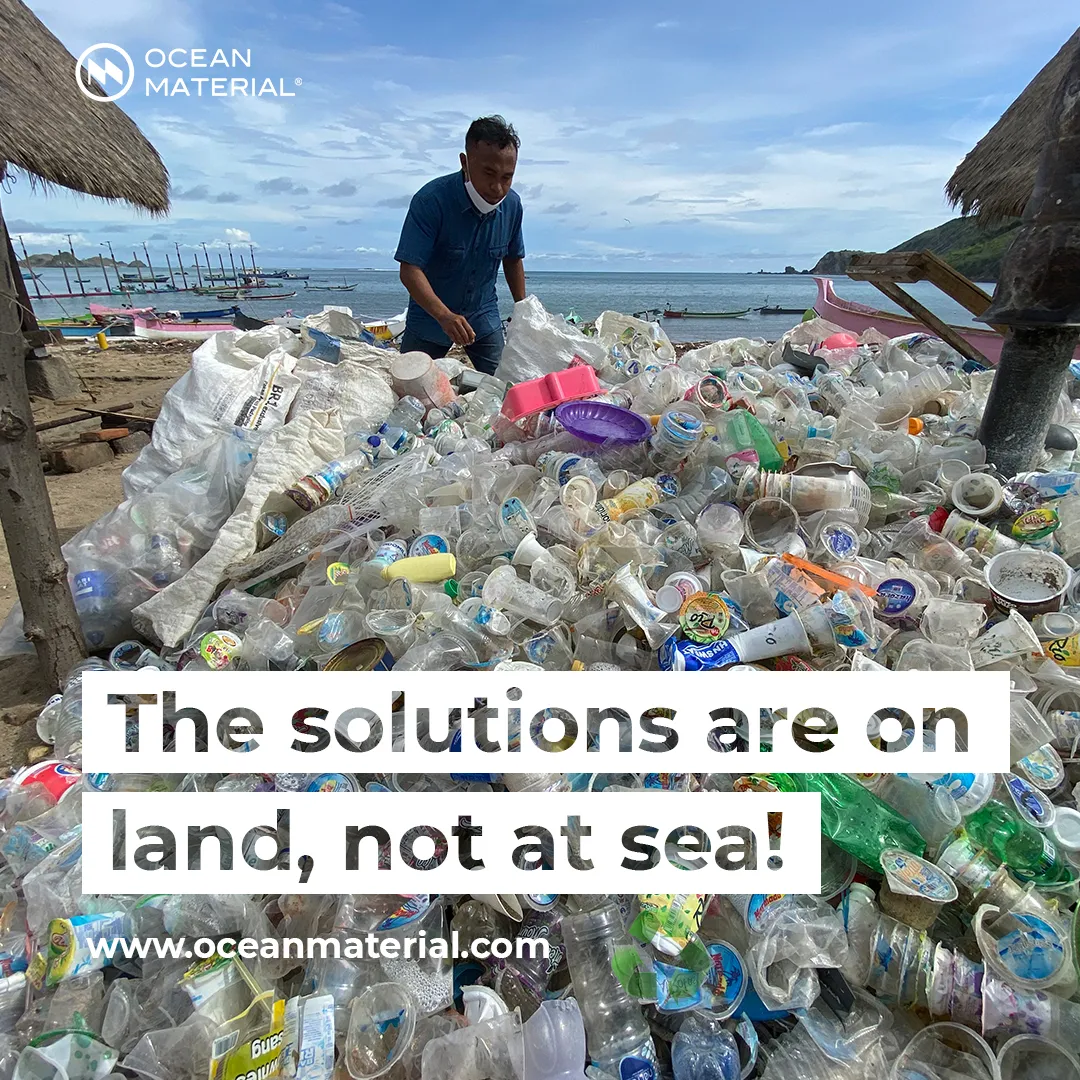
Image: Local collectors sorting plastic
Caption: Empowering waste collectors through fair pay and verified traceability
How Ocean Material Gets Done – Step by Step
From Collection to Certified PET Flakes – The Full Process in 9 Steps
📍 All images below were taken at Ocean Material partner sites in Southeast Asia – where our certified ocean-bound plastic supply chains begin.
Step 1: It starts here
How Ocean Material gets done step by step
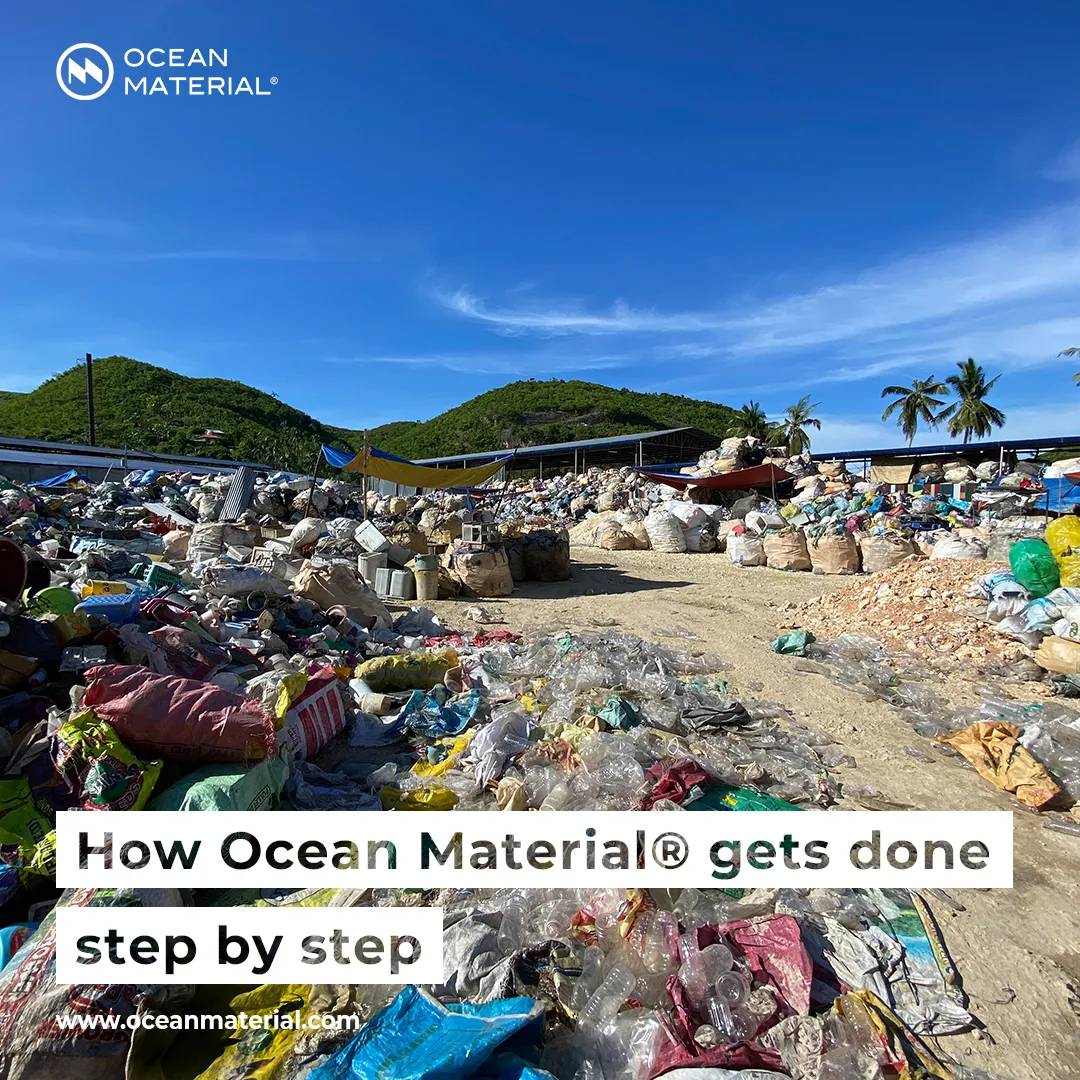
Remote coastal regions with inadequate waste infrastructure – here, plastic waste piles up without alternatives. We step in to create value from what would otherwise be lost.
Step 2: Collected by hand
Sorted by local collectors
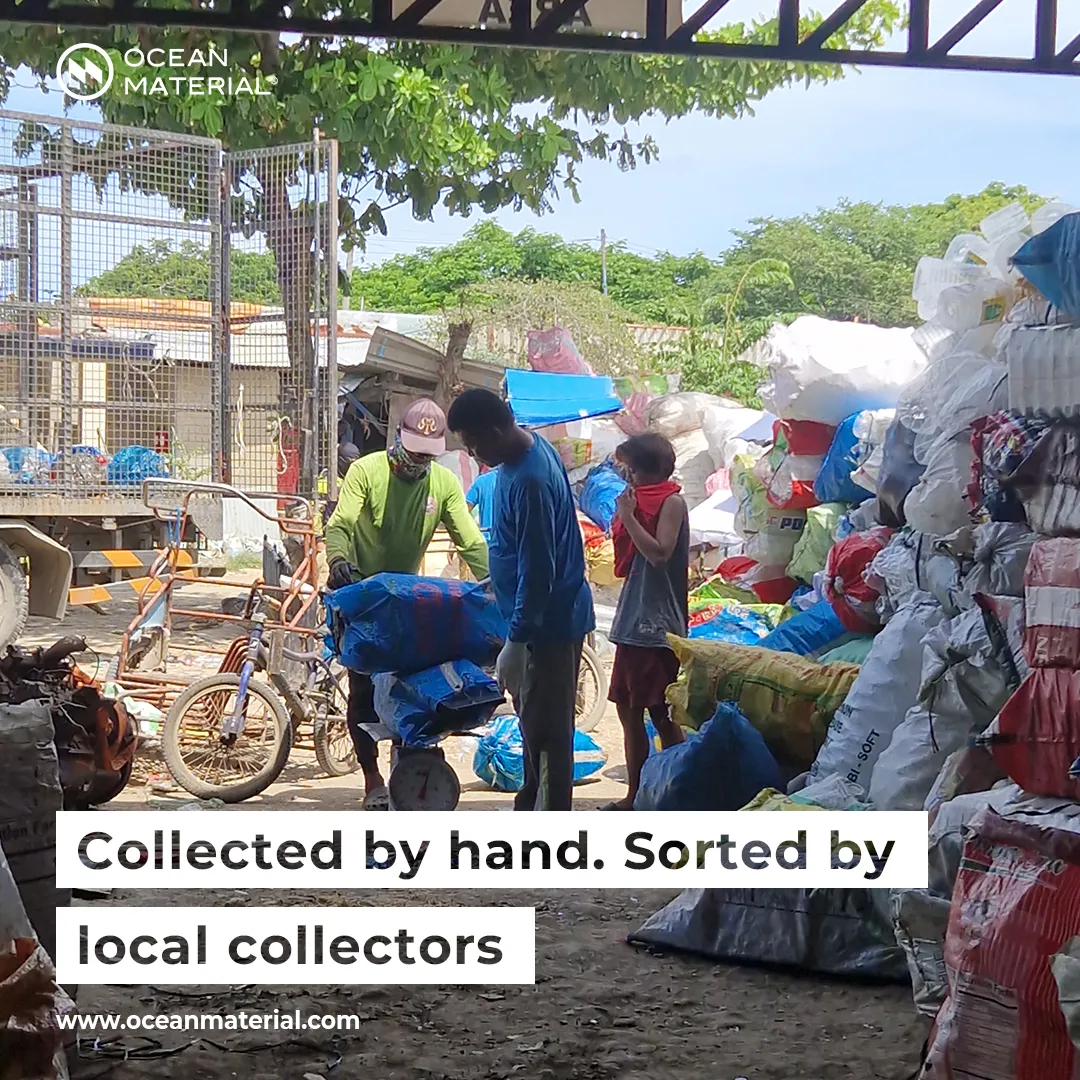
Waste pickers and micro-entrepreneurs collect mixed plastic, often using simple tools. Fair pay and dignity matter – every sack is weighed, documented, and traced.
Step 3: Separated by material type
Bottles are grouped by type – ready for the next step
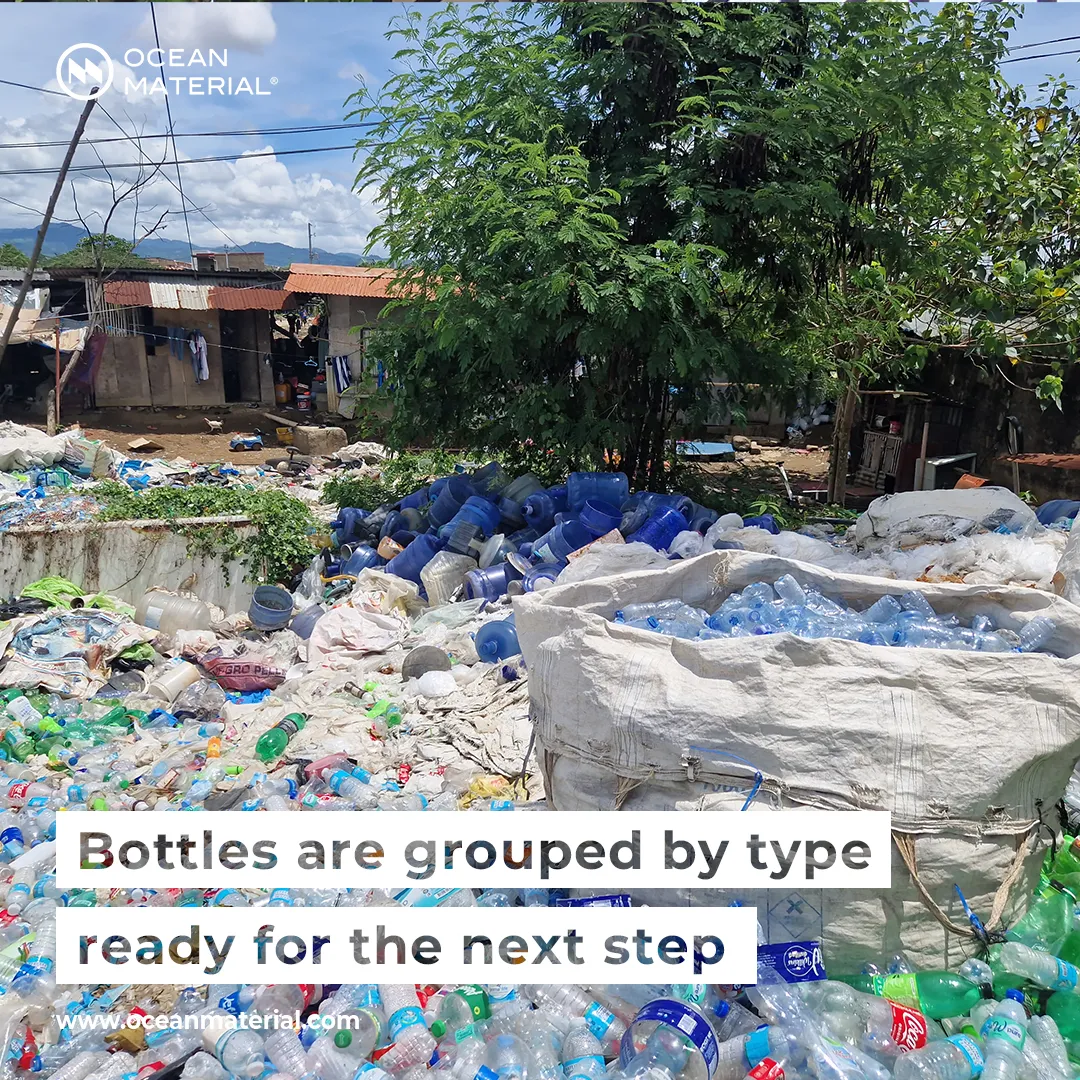
Sorting begins right after collection. PET bottles are separated from HDPE, PP, and other plastics to ensure clean input streams.
Step 4: Further separation
Colors separated and labels removed – mostly by hand
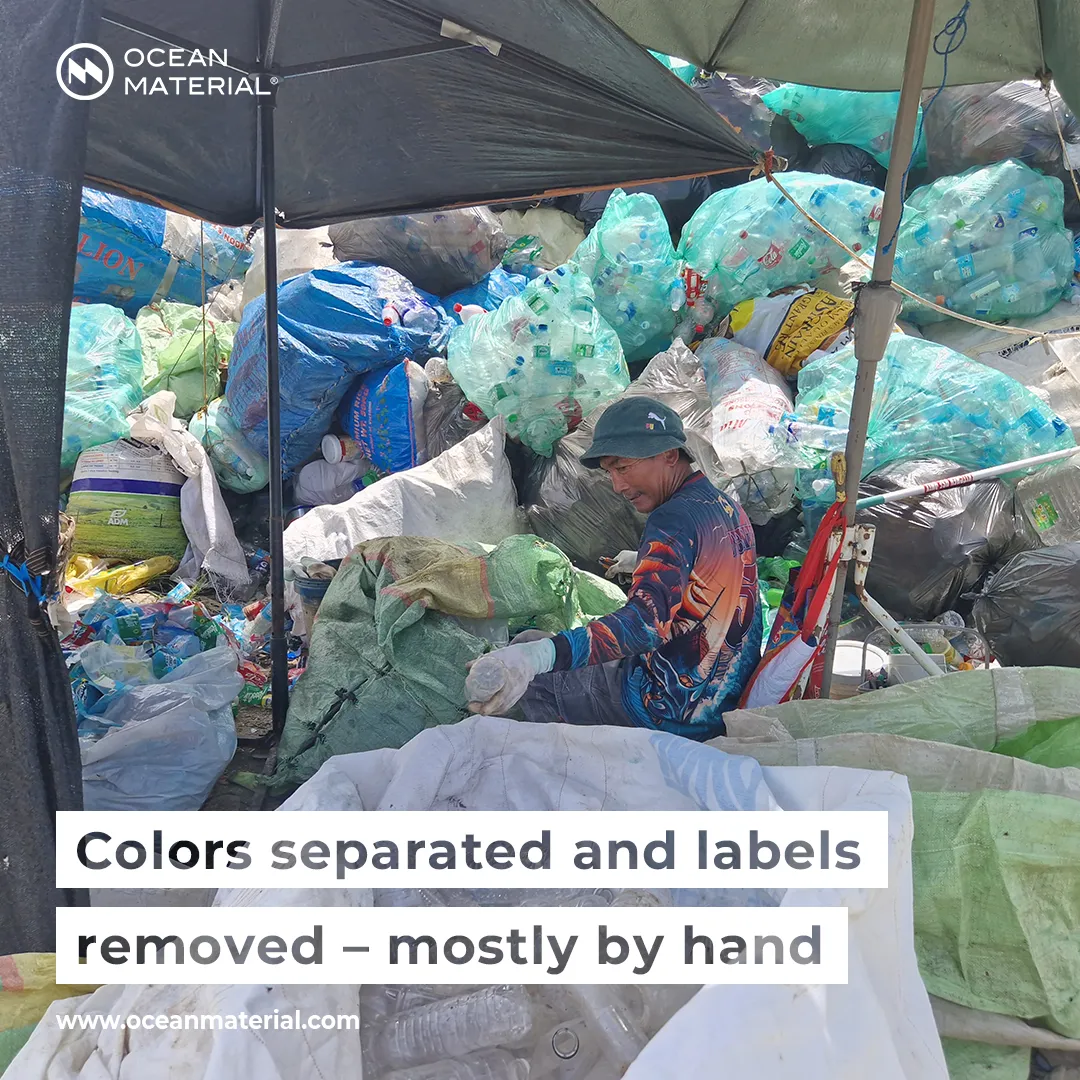
Manual sorting ensures quality: colored bottles are set aside, caps and labels removed, and contamination kept to a minimum.
Step 5: Pre-processing facility intake
Stored at pre-processing facility – ready for recycling
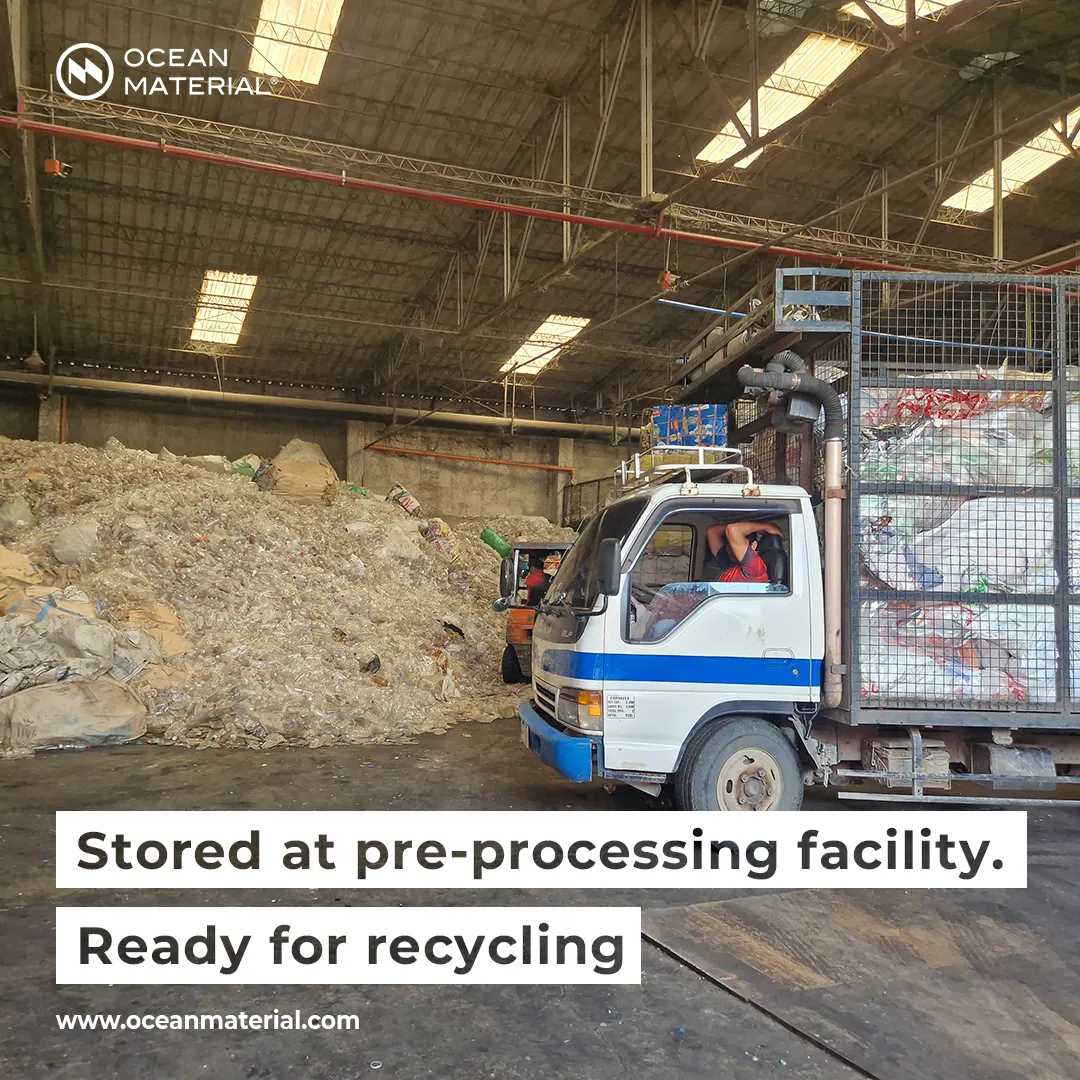
After sorting, materials are delivered to local partner facilities where pre-cleaning and storage prepare them for recycling.
Step 6: Pre-wash inspection
Pre-wash inspection before wet processing
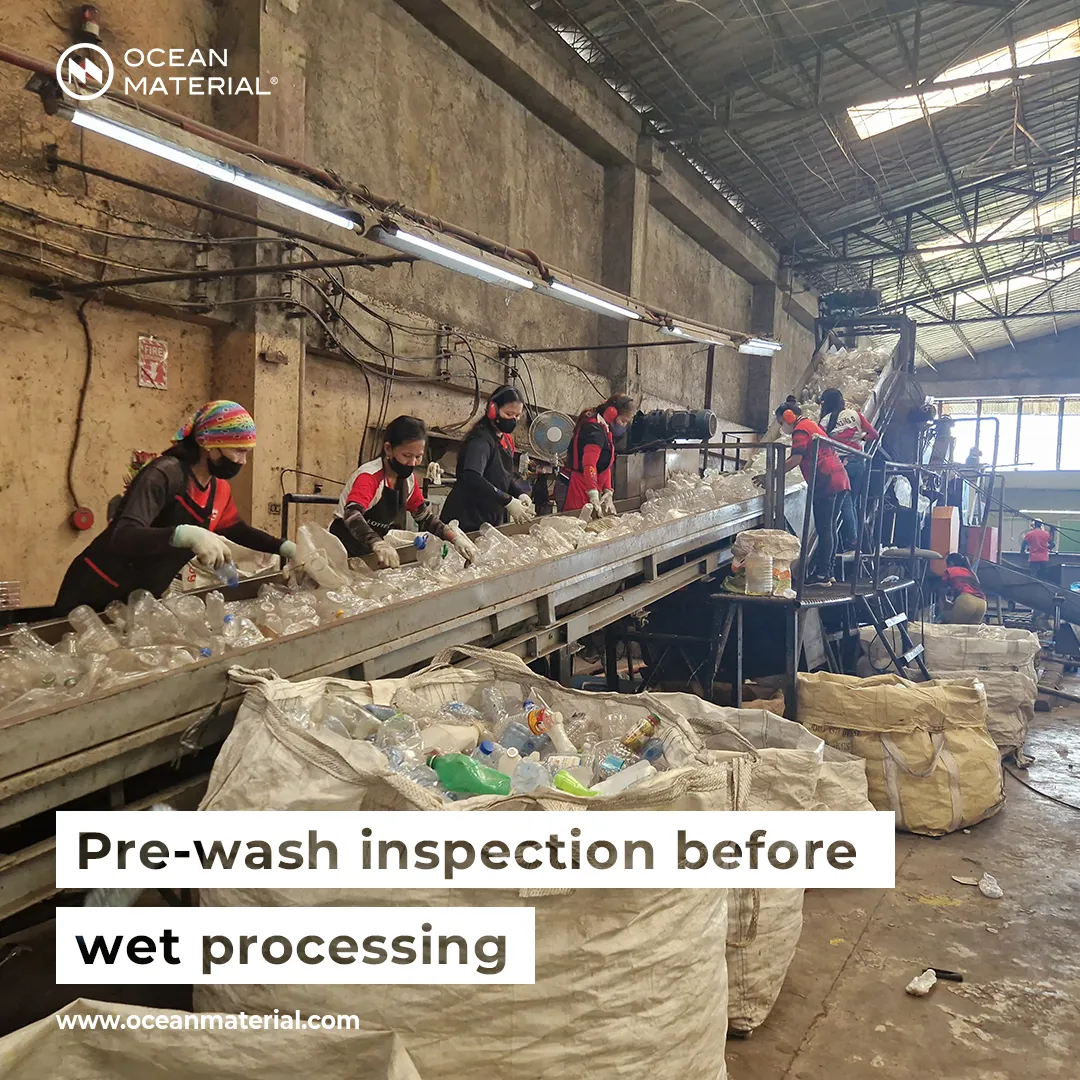
Bottles pass along inspection belts where trained staff remove remaining contaminants and perform visual checks.
Step 7: Cold wash
Cold washed – Dirt and dust out, value in
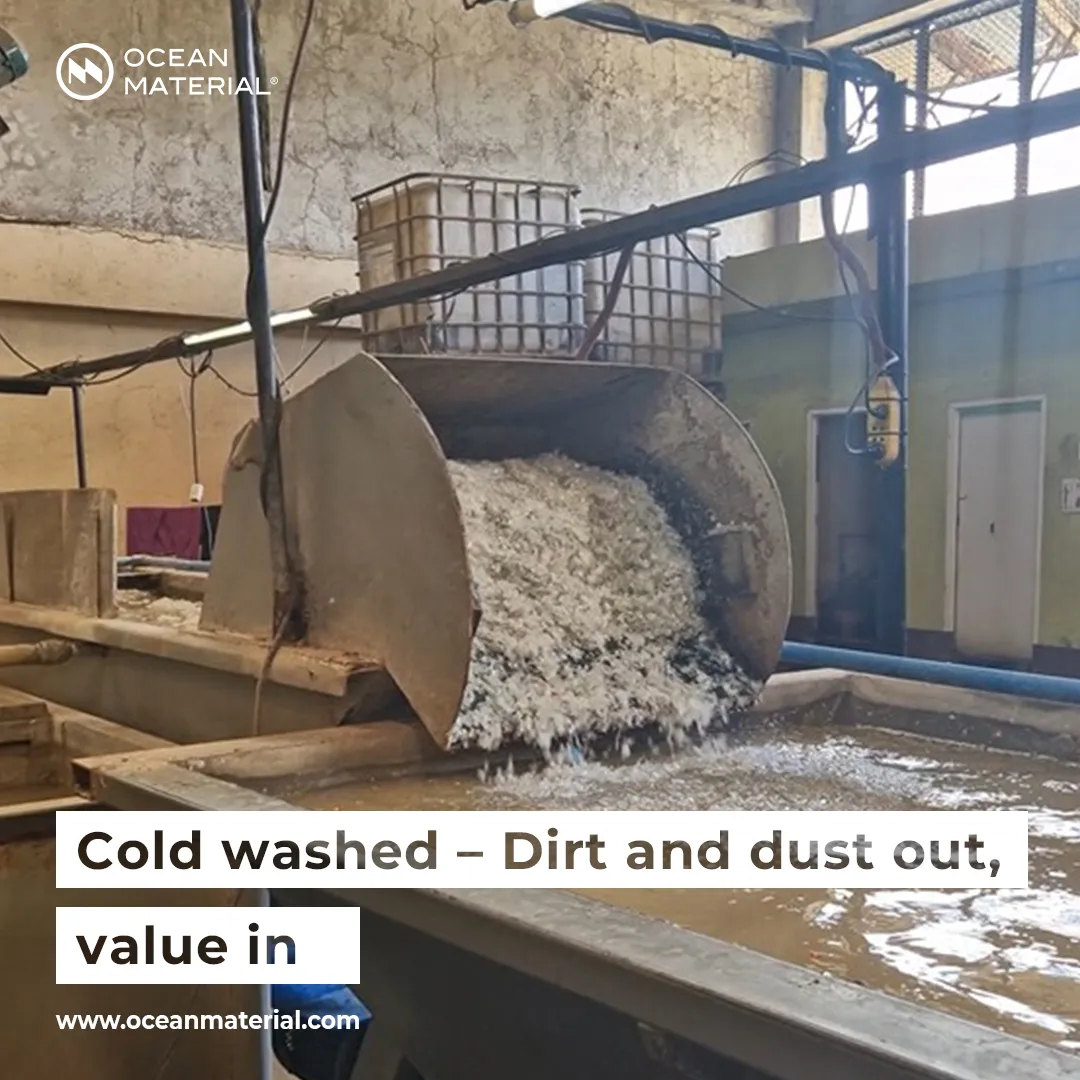
Washing removes surface dust and organic residue – critical for maintaining material integrity. Energy use depends on the feedstock and washing process.
Step 8: Hot wash
Hot washed – For quality that meets global standards
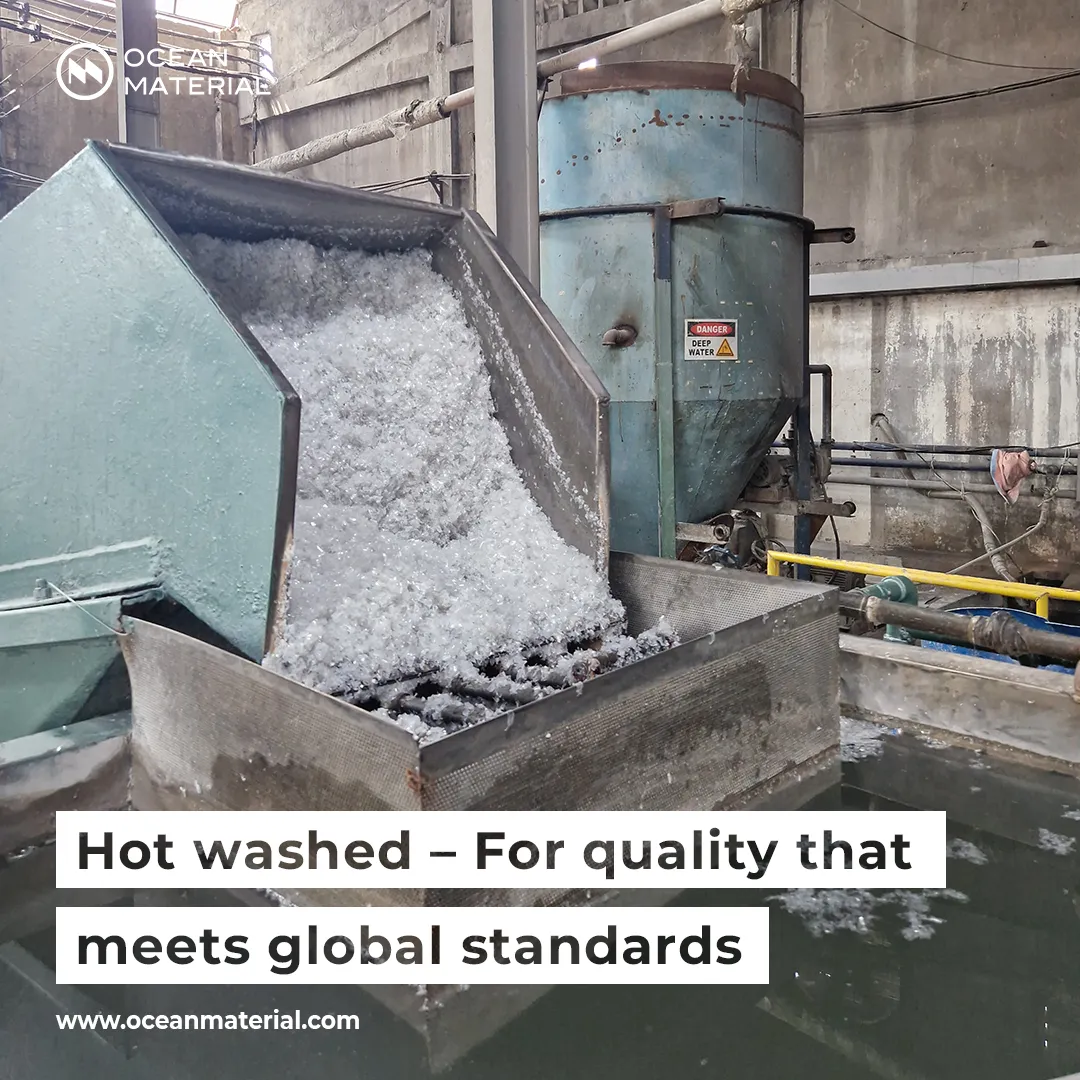
Intensive washing ensures hygiene and prepares the material for use in consumer goods, packaging, and textiles.
Step 9: Final output
Ocean Material – PET flakes. Certified. Traceable. Circular.
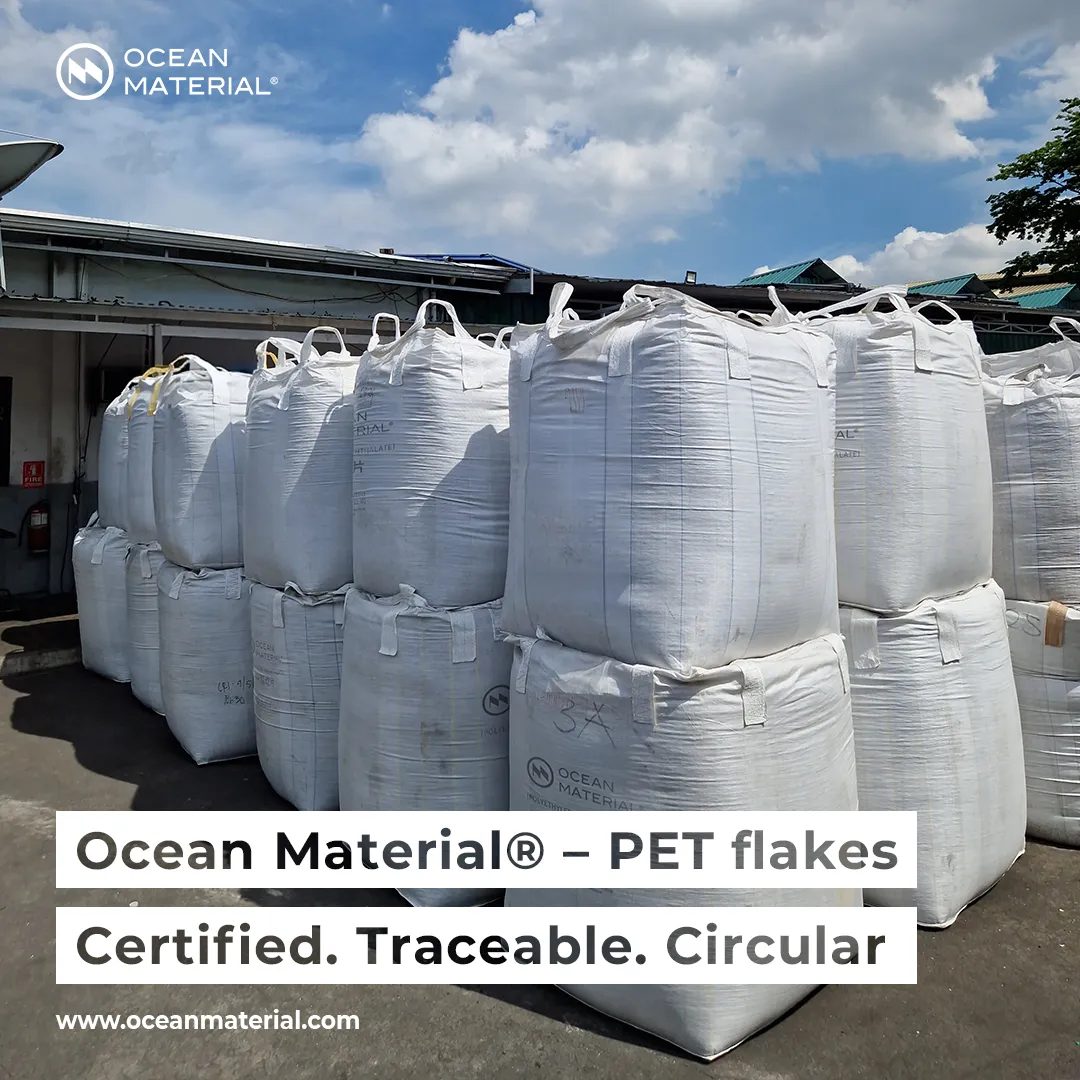
Our flakes are ready for upcycling – used by global brands in textiles, packaging, furniture, and logistics.
Our documented, traceable supply chains connect coastal collection and recycling with industrial demand.
The People Behind the Ocean-Bound Plastic
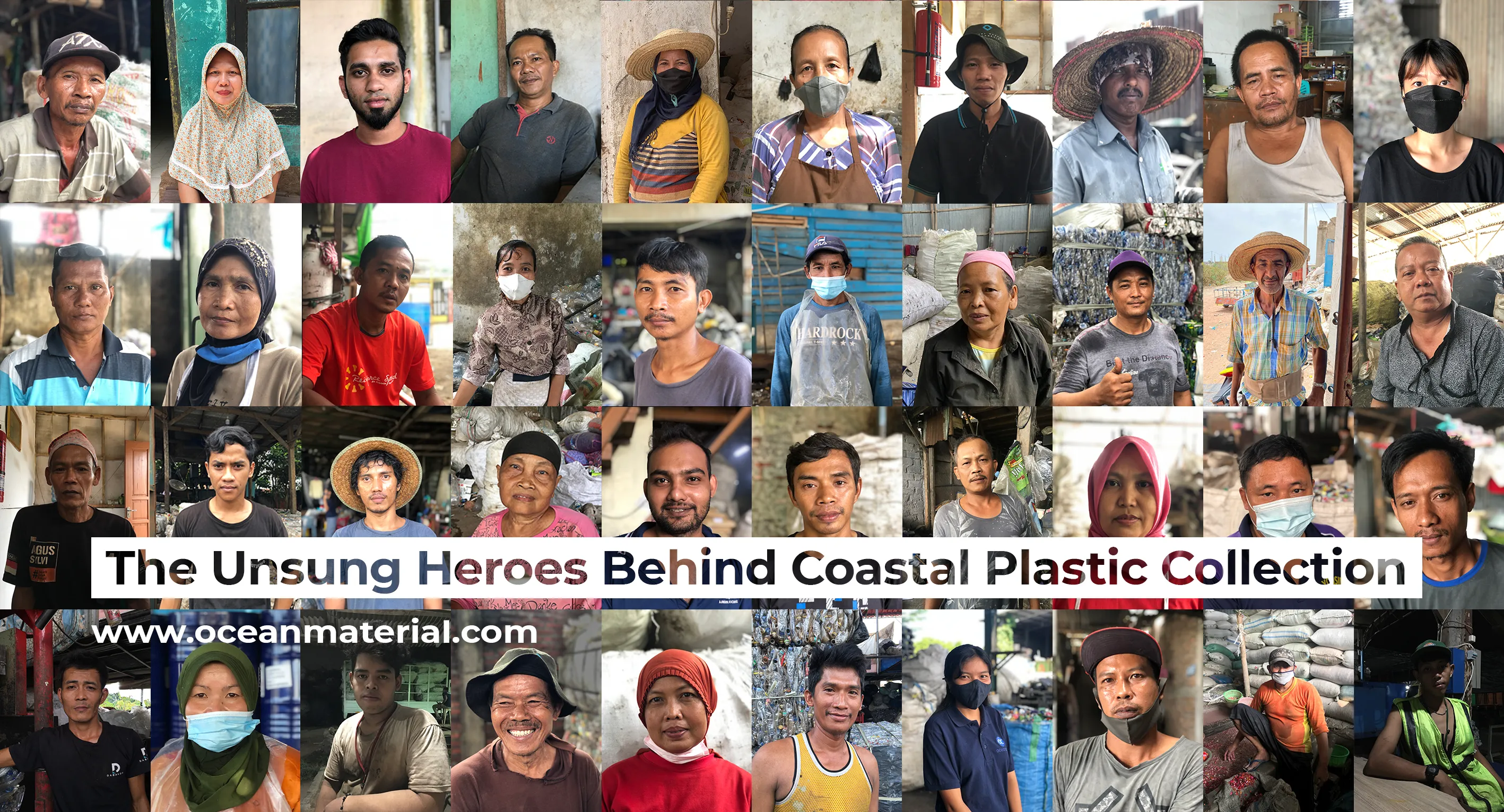
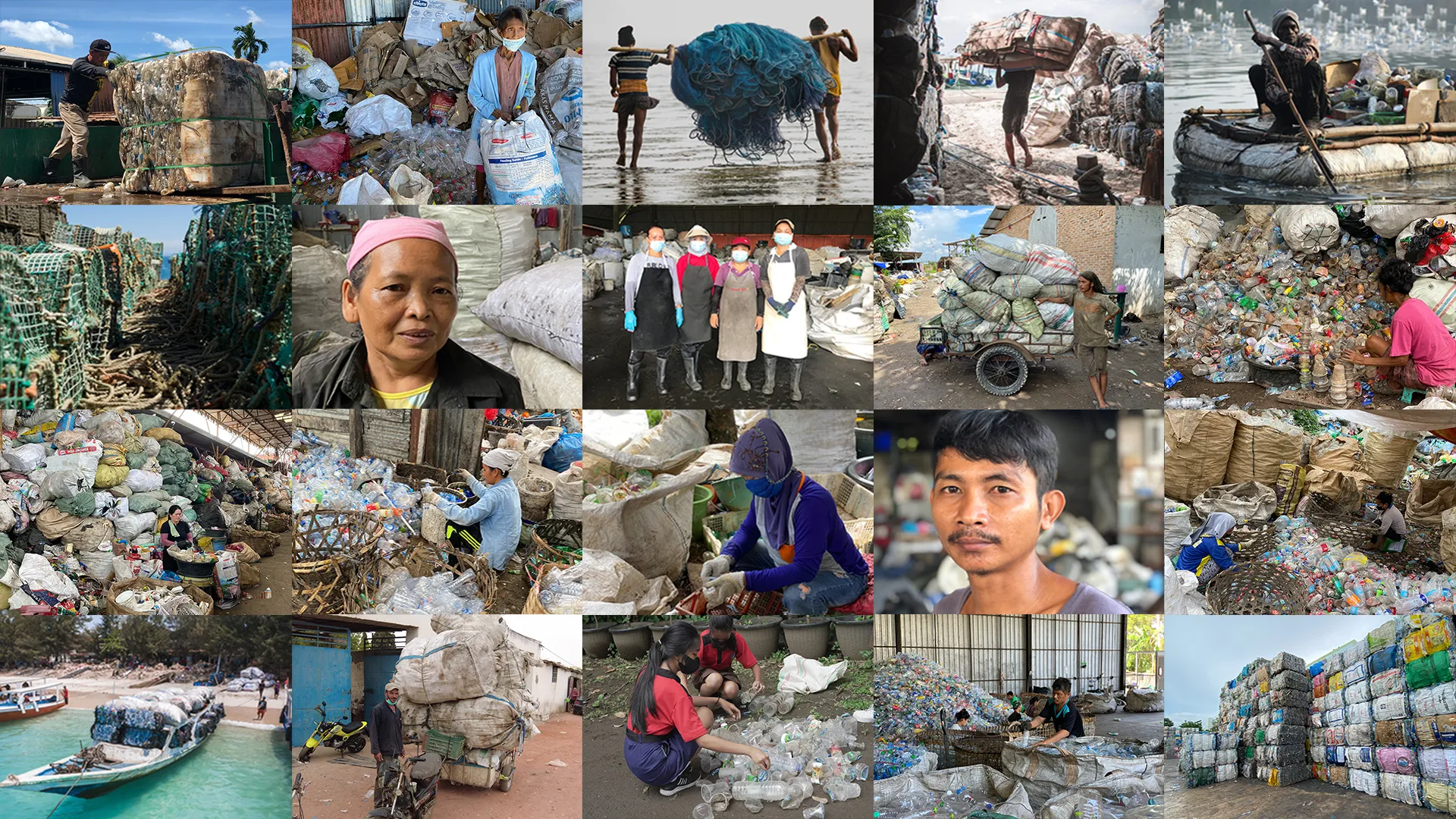
Image Collage: Portraits of workers, collectors, and community members
Caption: Real people. Real jobs. Real impact.
Our approach only works because it’s built around people. Community collectors, recyclers, fishers, processors – they are the true backbone of every flake we produce.
We don’t buy plastic anonymously. We know who collects it. We know how it was handled. And we document it every step of the way.
From Waste to Value
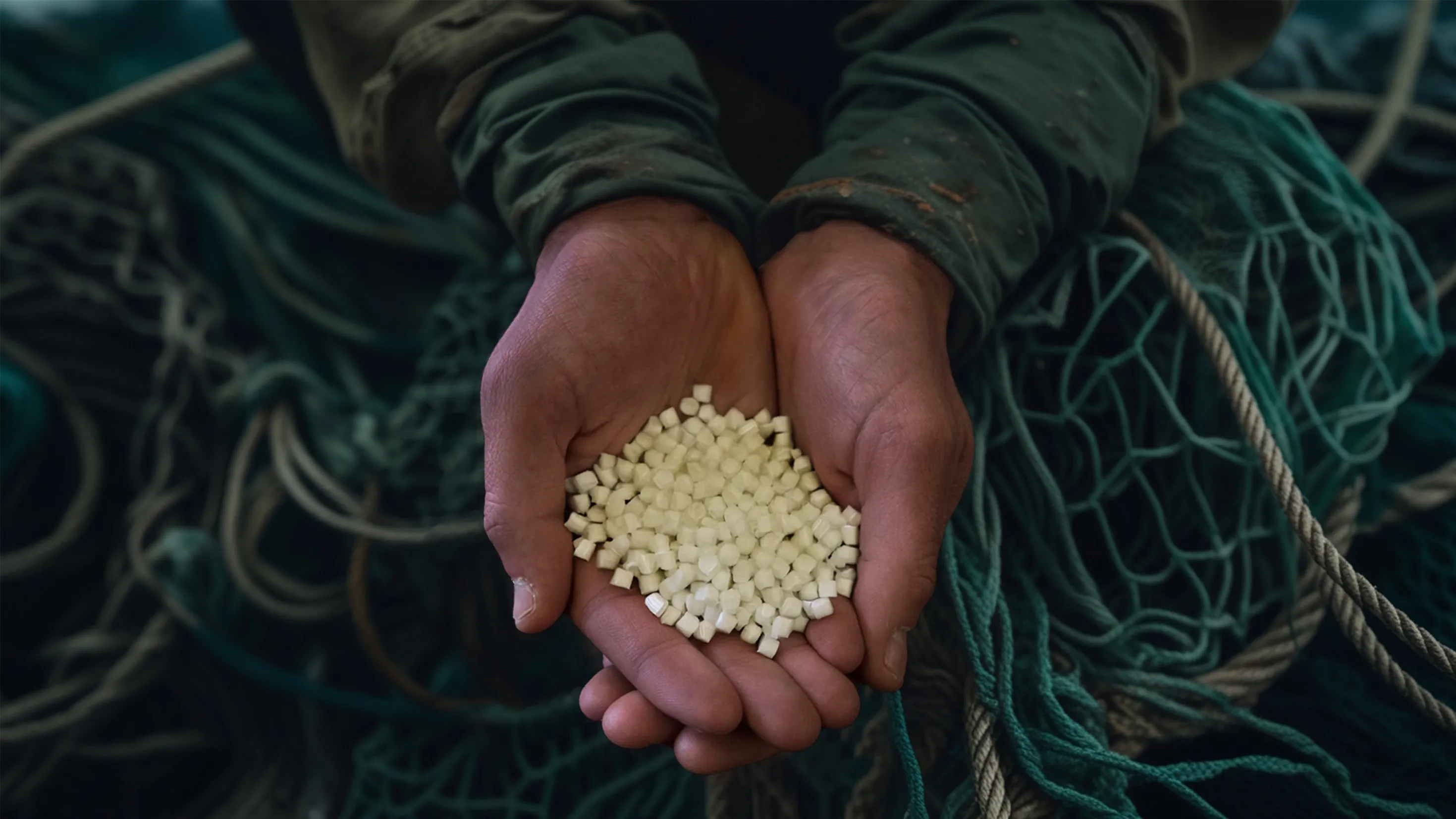
Image: Hands holding recycled pellets over fishing net
Caption: From fishing gear to high-quality recyclate.
Our technology turns formerly low-value plastic into high-performance materials used by global brands – from textiles to packaging to logistics.
By giving recovered plastic a commercial use, Ocean Material supports local collection and recycling businesses and helps keep materials in circulation.
Our Holistic Approach to Ending Ocean Plastic
🧠 Education as Prevention
We believe true circularity starts before collection. For The Circular Roadshow, Ocean Material develops the programme concept and learning content, while KOMA KARANTH FOUNDATION LIMITED organises local education delivery. The content aims to:
- Raise awareness about plastic waste and its environmental risks
- Offer insights into global supply chains and material value
- Help communities adopt better practices and prevent ocean leakage from the start
Ocean Material is designed to intercept, upcycle, and replace harmful plastic flows before they reach the ocean.
⚓ Fishing Nets & Gear: The Critical Threat
Fishing gear accounts for up to one third of ocean plastic – and it’s the deadliest form. Ghost nets entangle marine animals, damage coral reefs, and are nearly impossible to remove once submerged. We:
- Recover and recycle nets, ropes, and cages from fishing communities
- Upcycle gear into high-performance materials
- Track and document recovery with full traceability
🌿 Seaweed-Based Packaging: A Natural Replacement
We’re developing biodegradable packaging from seaweed feedstocks, sourced responsibly from marine farming communities. It’s:
- Developed with compostability as an objective, subject to testing of the final formulation and intended disposal conditions
- Designed to replace single-use plastics in food, cosmetics, and dry goods
- End-of-life performance to be assessed for the finished packaging; bio-based content alone does not establish the absence of microplastic risks
♻️ Upcycling Complex Mixed Waste: Turning Trash into Assets
Low-value mixed plastic streams, such as films, wrappers, multilayers and mixed textiles, can be difficult to recycle through conventional routes. Direct processing explores industrial uses for qualified secondary materials; not every mixed stream is suitable. Potential applications include:
- Construction-grade lightweight panels ideal for construction
- Modular logistics modules (e.g. pallets, protective boards)
Choosing an Ocean-Bound Plastic Supplier
Reducing ocean plastic pollution takes many approaches—from preventing waste leakage and recovering discarded fishing gear to cleaning rivers and developing markets for recycled materials.
Ocean Material, Bureo, Plastic Bank, Oceanworks, #tide and Parley connect plastic recovery with material and product applications through different programmes and supply chains. These approaches illustrate the variety of routes through which recovered plastics can find a new use.
The Ocean Cleanup, Plastic Fischer, RiverRecycle, 4ocean, Sungai Watch and everwave work on recovering waste from rivers, oceans or coastal environments. Their approaches differ in technology, geographical focus and how collected materials are processed, with some activities extending into recycling and new product applications.
We value the commitment of these organisations and the people behind them. We also collaborate with some of the organisations mentioned here on feedstock projects, connecting collection and recovery with new material applications. Across different approaches, there is a shared ambition: less plastic pollution in our rivers and oceans.
For manufacturers, the next step is finding a material that works in production. Ocean-bound PP and PET, or PA6 from end-of-life fishing nets, involve different specifications and processing requirements. A useful comparison considers polymer, grade, colour, material form, origin documentation and relevant standards, alongside sample availability, order quantities, delivery times and total delivered cost.
At Ocean Material, we actively develop material streams, compounds, product applications and supply routes together with recycling, production and technology partners. We connect recovered feedstocks with the requirements of industrial manufacturing—from material formulation and processing performance to reliable supply at commercial scale. Our focus is on consistent quality, competitive costs and materials that work in your application.
We welcome customers comparing options. Share your application, target specification, expected volume and delivery location with us. We can explore both suitable existing grades and opportunities to develop a solution around your project, giving you a clear basis for comparison.
Explore our materials or discuss your application with us.
Explore more: