Planetary Health Check 2026: Why Circular Materials Matter More Than Ever
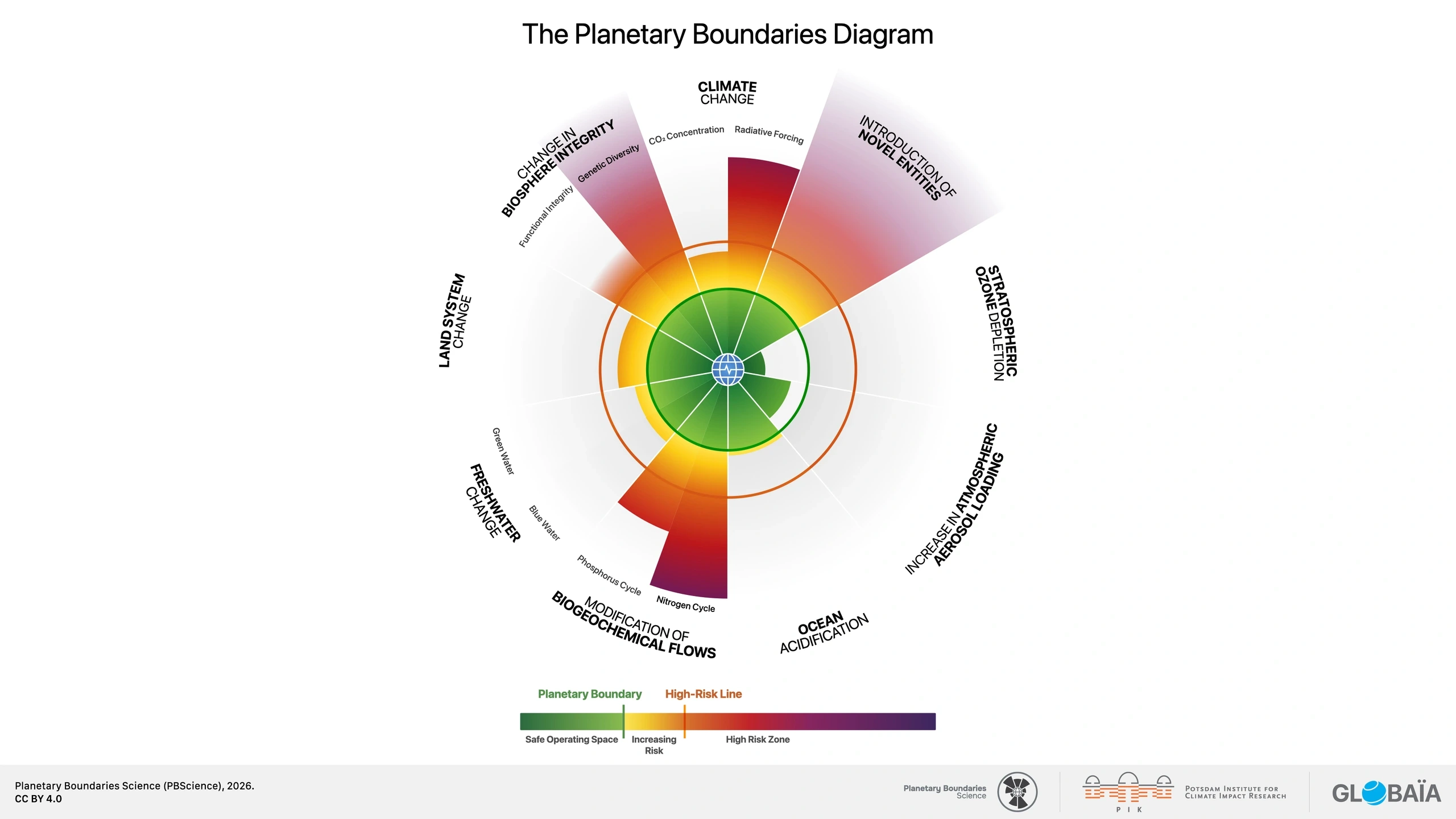
The status of Earth’s nine planetary boundaries in 2026. Source: Planetary Boundaries Science (PBScience), 2026, CC BY 4.0. Complete diagram, resized and converted to WebP.
By Ocean Material
Seven of nine planetary boundaries have been breached. The latest scientific assessment raises an important question for industry: how can we reduce environmental pressure while continuing to produce the materials and products society needs?
Seven boundaries crossed — and pressures are increasing
The Planetary Health Check 2026, released on 21 September by the Planetary Boundaries Science Lab at the Potsdam Institute for Climate Impact Research (PIK), delivers a stark assessment: seven of the Earth’s nine planetary boundaries have now been exceeded.
These boundaries describe critical Earth-system processes that help maintain the conditions on which human societies depend. Crossing them does not mean immediate environmental collapse, but it signals increasing risks to the stability and resilience of our planet.
The seven boundaries currently exceeded are climate change, biosphere integrity, land-system change, freshwater change, biogeochemical flows, novel entities and ocean acidification.
Ocean acidification became the seventh boundary classified as breached in the 2025 assessment. The 2026 report finds that pressure across all seven exceeded boundaries has continued to intensify.
Only stratospheric ozone depletion and atmospheric aerosol loading have shown improvement over the past decade, although regional aerosol pollution remains a concern.
The findings reinforce a fundamental challenge: environmental impacts cannot be addressed in isolation. Climate, ecosystems, oceans and material use are interconnected.
Plastic pollution is part of a much larger challenge
For the materials industry, one particularly relevant boundary is the introduction of novel entities.
This category encompasses human-introduced substances and materials, including synthetic chemicals and plastics, whose production, release and potential environmental impacts can exceed society’s ability to assess and manage them safely.
Plastic pollution is one visible consequence of the way materials are produced, used and discarded. Yet the challenge extends beyond waste collection.
Fossil-based feedstocks, manufacturing processes, energy consumption, chemical additives, uncontrolled releases and end-of-life treatment all contribute to the environmental footprint of plastic products.
Preventing plastic pollution therefore requires more than collecting discarded material. It also requires better product design, responsible material selection, improved waste management and circular systems that preserve material value.
For manufacturers and brands, this creates an opportunity to rethink not only where materials come from, but also how long they remain useful and what happens to them after use.
The ocean connection: more than marine plastic waste
The health of the oceans is closely linked to planetary stability.
The Planetary Health Check identifies ocean acidification as one of the seven exceeded boundaries. As the ocean absorbs carbon dioxide from the atmosphere, seawater chemistry changes, creating risks for marine organisms and ecosystems.
This is a different environmental process from marine plastic pollution. Removing plastic waste does not directly reverse ocean acidification.
However, both challenges highlight the need to reduce the wider environmental pressures associated with resource consumption, industrial production and waste.
Marine-related material streams also represent opportunities for more effective resource recovery.
End-of-life fishing nets and ropes, discarded plastic materials and recovered subsea cables can contain technically valuable polymers. With appropriate collection, separation, processing and quality control, some of these materials can be returned to productive use.
Instead of treating every end-of-life product as waste, the circular economy asks whether its materials can become inputs for another application.
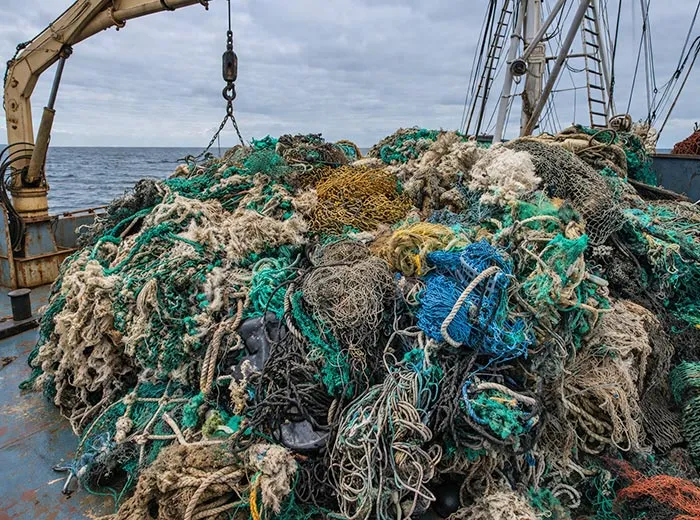
End-of-life fishing gear can provide valuable polymer feedstock when recovered, separated and processed appropriately. Image: Ocean Material image library.
From recycling ambition to industrial reality
The scientific case for reducing environmental pressures is clear. Turning that ambition into practical material solutions is considerably more complex.
For recycled materials to be adopted at scale, they must meet the same essential industrial requirements as other manufacturing inputs.
Material performance matters. So do reliable specifications, consistent quality, competitive pricing, processing compatibility and dependable supply.
A recycled polymer that cannot meet an application’s technical requirements is unlikely to replace virgin material successfully.
This is why circularity must move beyond environmental claims and become an operational part of industrial procurement and product development.
For example, recycled polypropylene (PP) from fishing ropes and recycled polyamide 6 (PA6) from fishing nets can be suitable for different applications depending on polymer properties, contamination, processing history and the required material grade.
Similarly, recovered polyethylene from subsea cable systems may offer opportunities for recycling, provided that material separation, quality and application requirements are addressed.
The important question is not simply whether a material has been recycled.
It is whether it can reliably replace another material in a functioning industrial application.
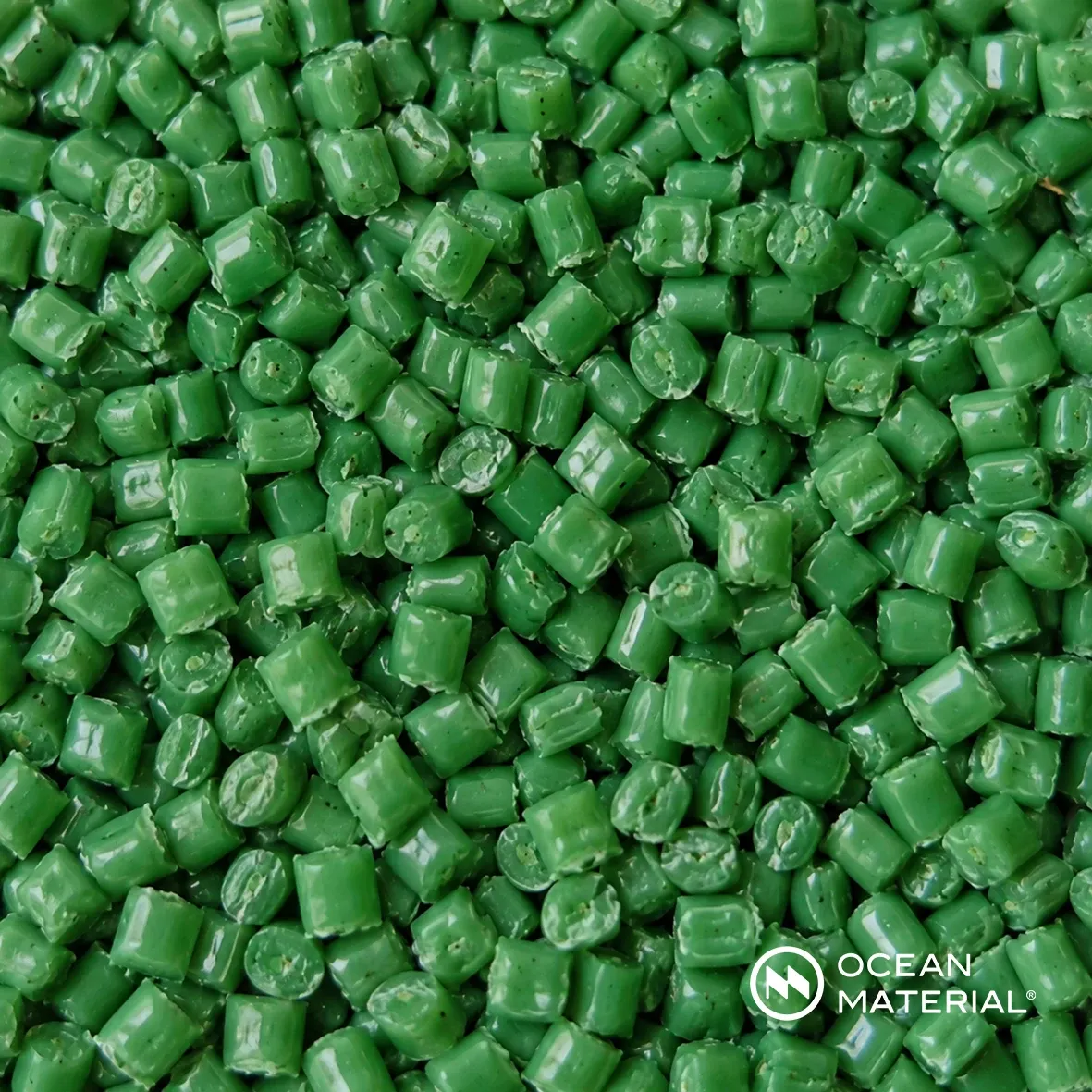
Recycled PA6 pellets from fishing nets. Grade selection and qualification depend on the intended application. Image: Ocean Material.
Circularity must work technically and economically
At Ocean Material, we work at the intersection of material recovery, recycling technology and industrial applications.
Our approach connects recycled material streams with manufacturers seeking technically suitable and commercially viable alternatives.
This includes recycled polymers from fishing gear, ocean-bound plastic sources and recovered marine infrastructure, alongside other circular material solutions.
The work involves identifying suitable materials, understanding specifications, qualifying potential applications and connecting customers with reliable processing and supply partners.
Environmental progress depends on solutions that can move beyond individual pilot projects.
That requires materials available in relevant volumes, with consistent quality and economics that support long-term adoption.
Circular materials can contribute to reducing demand for virgin resources, improving resource efficiency and preventing certain waste streams from becoming environmental pollution. However, their actual benefits depend on the application, the material they replace and the environmental impacts across their full life cycle.
Recycling is therefore an important tool — but not a substitute for reducing unnecessary material consumption, designing products for longer use and preventing pollution at its source.
Turning scientific urgency into material decisions
The Planetary Health Check 2026 is a reminder that environmental challenges are systemic. No single technology, material or company can restore the planet’s boundaries on its own.
Nevertheless, industry has meaningful decisions to make.
Which materials do we specify? Can recycled feedstocks meet our performance requirements? Can products remain in use longer? Are there viable alternatives to conventional sourcing? And can material recovery become a predictable part of our supply chains?
These decisions may appear incremental, but they determine how material systems evolve.
The transition to a circular economy will not succeed on environmental ambition alone. It will succeed when better material solutions are technically reliable, economically competitive and practical to implement at scale.
The challenge is no longer simply to demonstrate that circular materials are possible. It is to make them work in everyday industrial applications.
Further Reading & Sources
The global scientific findings above come from PBScience/PIK. The industrial interpretation and material examples are Ocean Material’s perspective; they do not imply endorsement by PBScience or PIK.
- Planetary Health Check 2026 — Official Assessment
- Planetary Health Check 2026 — Release Announcement
- Planetary Health Check — Official Figures & Downloads
- Potsdam Institute for Climate Impact Research — Full Scientific Report
Exploring recycled materials for your application?
Discover our circular material portfolio or get in touch to discuss your material requirements.