Non-Recyclable Waste
OCEAN MATERIAL | NOV 21TH 2024 | 10 MIN
Breaking Barriers in Recycling: How Ocean Material is Revolutionizing the Use of Non-Recyclable Waste
Ever wonder why companies hesitate to use more recycled materials? From our experience, two main barriers often stand out: quality and cost. While recycling has long been seen as a key solution to reduce waste, materials like contaminated or multi-layer plastics remain a significant challenge. Traditional recycling methods struggle with these complex materials—but that’s beginning to change.
At Ocean Material, we’re tackling these challenges head-on with breakthrough technologies designed to transform waste into valuable resources. By collaborating with our engineering partner, MeSentia, we’ve pioneered technological solutions that turn non-recyclable materials into high-quality, functional, and cost-effective products.
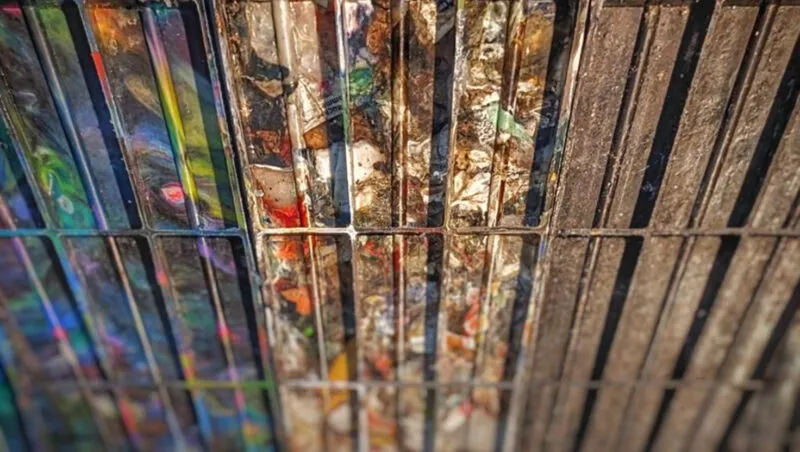
One of our most exciting innovations is the Waste2Value technology. This groundbreaking process takes non-recyclable mixed waste—such as contaminated packaging and multilayer compounds—and transforms it directly into a lightweight, durable wood substitute. The ecological and economic potential of this technology is immense.
Functionality: Light, Durable, and Efficient
Lightweight construction and efficient material use are development objectives for applications in logistics, construction and manufacturing. Comparisons with wood or other materials must use equivalent load capacity, durability and service requirements. Weight, transport and energy benefits need to be established for the particular product design rather than assumed for the material as a whole.
Environmental Assessment: Preliminary Pallet Findings
A preliminary pallet assessment indicates potential for substantial reductions in greenhouse gas emissions and energy demand in the scenarios assessed. These are reference-based findings that depend on the data and assumptions used, not measured or independently validated results for the current industrial system. Validation needs to consider current feedstock, processing energy, product performance and comparable system boundaries.
Direct processing aims to create material uses for qualified secondary streams that are difficult to recycle conventionally. Repeat processing, service life and end-of-life recovery need application-specific assessment; continuous closed-loop reuse and a general environmental advantage are not established here.
Economic Advantage: Cost-Effective and Future-Proof
The economic objective is to make suitable low-value secondary streams usable in industrial products. Feedstock preparation, processing, quality requirements and logistics determine costs; waste origin alone does not ensure low cost or long-term price stability.
For logistics applications, cost comparisons should be made for the selected pallet design and equivalent service requirements. No general percentage saving is stated here. The current development focus is lightweight design, process efficiency and validation of the industrial system.
Disruptive Innovation: Creating Value from Previously Unused Waste
Today, non-recyclable materials like contaminated plastics and multilayer compounds are often not even collected because they hold no inherent value. Our Waste2Value technology is changing this dynamic by creating a new market for these overlooked materials.
By assigning value to waste that was previously ignored or discarded, this innovation unlocks new opportunities in global waste management. It tackles pressing challenges such as illegal dumping and landfill overflows, while simultaneously generating high-quality, functional products.
This game-changing approach redefines what’s possible in recycling, paving the way for sustainable solutions that benefit businesses, communities, and the planet.
The Outlook
As global wood stocks continue to decline and less than 9% of the world’s plastic is recycled (according to the UN Environment Program 2023 Report), the need for innovative recycling solutions is clear. Current recycling methods fall short, leaving large portions of potentially recyclable materials in landfills or incinerators.
Waste2Value explores a direct material-recovery route for suitable difficult streams. Whether it offers an alternative to incineration, landfill or chemical recycling depends on feedstock qualification, application requirements and local treatment options. It is not a claim of general technical or environmental superiority over other recycling routes.
At Ocean Material, we’re proud to lead the charge with innovative solutions that prioritize people, the planet, and profit—proving that sustainability and economic success can go hand in hand.
About Us
Ocean Material is at the forefront of recycling innovation, transforming waste into high-quality, sustainable materials. In partnership with MeSentia, we’re redefining what’s possible in recycling innovation. Join us in creating a future where no resource goes to waste.
Watch the latest video here.
Explore more: